
Understanding Misaligned Teeth: Modern Dental Solutions
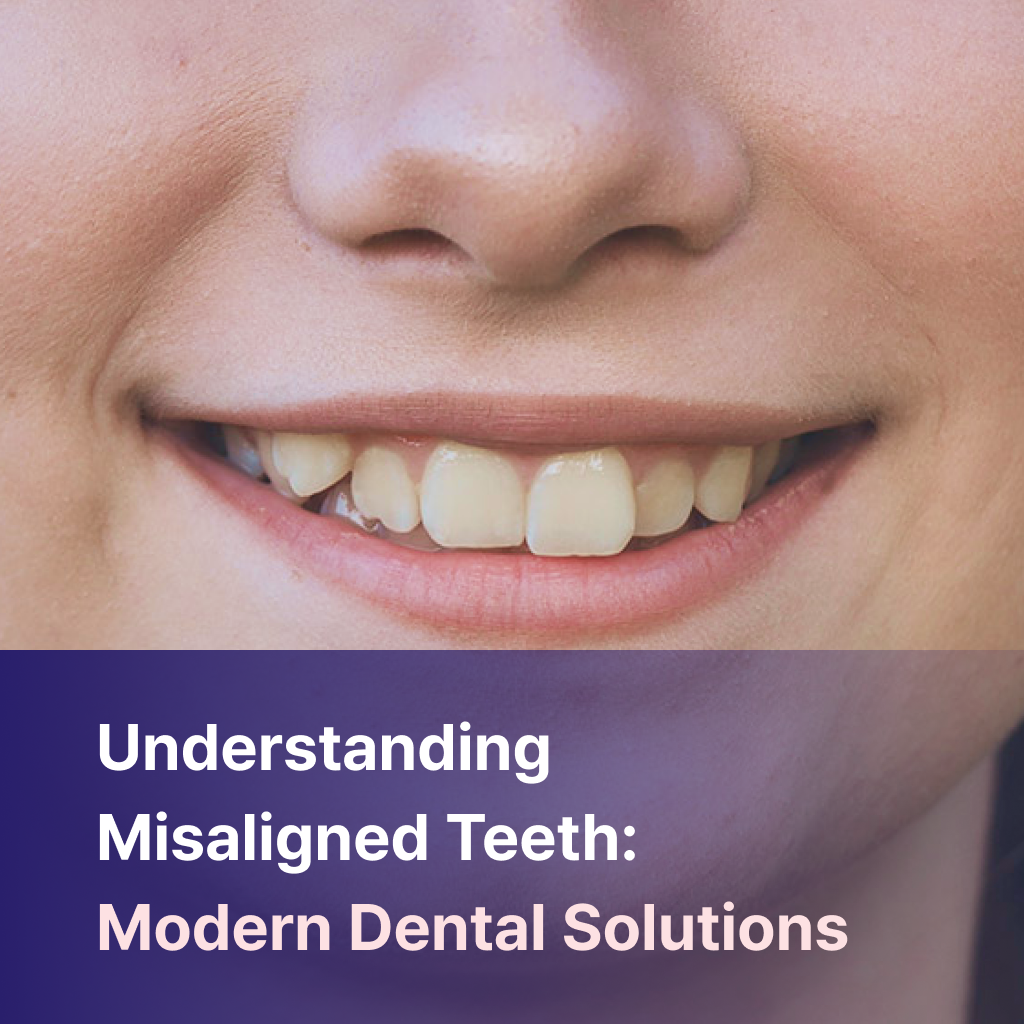
A healthy smile relies on harmony and balance. Just as balance matters in nature and human relationships, teeth and jaws must also work together in an aligned, stable way. When the dental arch does not properly match the teeth, the result is misalignment, or what many people simply call “crooked teeth.”
Misaligned teeth occur when the dental arch cannot accommodate all the teeth evenly. Some teeth may rotate, protrude, overlap, or sit too far back. This irregular positioning can affect both function and appearance.
Why Crooked Teeth Become a Problem
Crooked or crowded teeth can trap food easily and make proper brushing harder. This may increase the risk of cavities and gum inflammation. This is one of the many dental issues that result from misalignment. Misalignment can also create uneven biting forces that place more stress on certain teeth. Over time, this may weaken the teeth or contribute to jaw discomfort.
In some cases, misaligned teeth may also appear alongside discoloration, visible enamel defects, or brown and yellow lines on the front surface. These issues can result from enamel hypoplasia, excessive fluoride exposure, or long-term oral hygiene challenges.
A Real-Life Example of Misaligned Teeth
A patient in their early 20s struggled with confidence because of severely crooked teeth. Beyond aesthetic concerns, the case included enamel discoloration, overbites, chipped or broken teeth, and asymmetry in the gumline. The front teeth appeared uneven in length due to irregular gum levels. The upper canines and lateral incisors were also rotated and protruding.
Cases like this show that misalignment can affect more than appearance. It may also influence daily comfort, smile confidence, and long-term oral health.
Orthodontic Treatment Options for Misaligned Teeth
Orthodontic treatment is often recommended to address crooked teeth, and the specific method depends on the individual case and treatment plan. Common approaches include:
- Extraction Orthodontics: Removing certain teeth to create space and align remaining teeth.
- Arch Expansion Orthodontics: Expanding a narrow or asymmetrical dental arch to help accommodate the teeth properly.
- Transparent (Clear Aligner) Orthodontics: Using clear aligners to gradually reposition teeth.
For many patients, orthodontic treatment is an important and effective solution for improving tooth alignment and bite balance. However, even after the teeth have been moved into better positions, some aesthetic concerns may still remain. These can include uneven tooth shape, discoloration, enamel defects, worn edges, black triangles, or differences in tooth proportion and gumline symmetry.
In these cases, patients may consider restorative treatment after orthodontics to complete the final appearance of the smile. At MINISH Dental Hospital, hybrid cases that combine orthodontic treatment with MINISH can help create a more satisfying final result, especially when both alignment and detailed smile aesthetics need to be improved.
Completing the Smile After Orthodontic Treatment
After orthodontic treatment, some patients may still feel that their smile looks uneven, discolored, or incomplete. In these cases, MINISH can help refine the final result as a restorative solution.
MINISH Dental Hospital takes a minimally invasive restorative approach that focuses on preserving natural tooth structure. By using enamel-like materials and precision design, MINISH can improve tooth shape, color, and proportion. This can help create a more balanced and natural-looking smile after orthodontic treatment.
The goal of treating misaligned teeth isn’t only to make them look straight. It is also to create a balanced oral structure where the teeth, jaws, gums, and bite work together in harmony. With MINISH, certain cases of misaligned or crooked teeth may be improved to achieve a more harmonious result without the need for extensive orthodontic treatment.
Frequently Asked Questions (FAQs)
This FAQ addresses common questions about misaligned teeth, orthodontic treatment, and the role of MINISH in addressing certain aesthetic and restorative concerns.
General Misalignment and Dental Issues
Misaligned teeth, or “crooked teeth,” occur when the dental arch does not properly accommodate the size or position of the teeth. This causes teeth to rotate, overlap, protrude, or sit irregularly, affecting both function and appearance.
Misalignment creates dental issues like crowded spaces that trap food, increasing the risk of cavities and gum inflammation. It can also cause uneven biting forces that stress and weaken damaged teeth over time, potentially leading to jaw discomfort.
Yes. Misaligned teeth may also show discoloration, visible enamel defects such as enamel hypoplasia, or other surface irregularities.
Traditional vs. Restorative Treatment
Common orthodontic treatments include extraction orthodontics, arch expansion, and clear aligner treatment.
Orthodontic treatment focuses primarily on moving teeth into improved positions. Concerns related to tooth shape, color, surface defects, black triangles, or existing discoloration may still remain after alignment is achieved.
MINISH: A Restorative Approach
In selected cases, MINISH may be considered when the concern involves visible tooth rotation, irregular shape, proportions, discoloration, or other surface-related issues. Unlike orthodontic treatment, MINISH does not physically move the teeth. Instead, it uses a restorative approach to refine the visible shape and appearance of the smile.
Yes, MINISH follows a minimally invasive approach that focuses on preserving natural tooth structure. Depending on the case, minimal or no shaving may be required on the original tooth surface.
Depending on the individual case, MINISH may address visible misalignment, tooth rotation, discoloration, chips, minor crack or surface defects, and irregular tooth proportions.
Treatment time varies by case. In many cases, MINISH may require a shorter treatment period than traditional orthodontics.
MINISH treatment is available at MINISH Dental Hospital and certified MINISH Providers.
Regular brushing, flossing, and routine dental check-ups are essential for maintaining your dental veneers.
Check Out Our Other Blog Posts!
Looking for more insights on cutting-edge dental technology, minimally invasive treatments, and tips for preserving natural tooth structure? Explore our latest blog posts—from expert advice by Dr. Kang to real success stories and insights from MINISH Dental Hospital.
Whether you’re a dental professional or a curious patient, you’ll find valuable info on everything from tooth integrity, oral health, and innovative dental solutions to the science behind MINISH.
👉 Stay informed. Stay inspired.